15
Oct
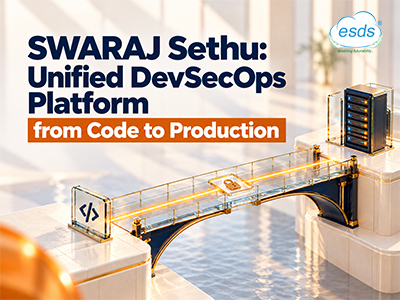
SWARAJ Sethu: Unified DevSecOps Platform from Code to Production
TL;DR: SWARAJ Sethu is a unified DevSecOps platform from ESDS that brings source control, CI/CD, security scanning, infrastructure as code (Terraform and Ansible), multi-cluster Kubernetes, configuration, observability and governance into one connected environment, from code to production. This article explains how DevSecOps differs from DevOps, how DevSecOps tool sprawl causes context switching, broken handoffs and... Read More
15
Oct
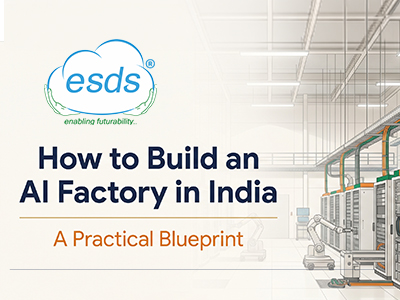
How to Build an AI Factory in India: A Practical Blueprint
TL;DR: This is how to build an AI factory for Indian conditions: in a sequence, not from a box. Size it from the decisions it must produce and rent GPU capacity before you own any. Keep training data and model weights inside India by design. Run every model through one shared pipeline, with a governance... Read More
13
Oct
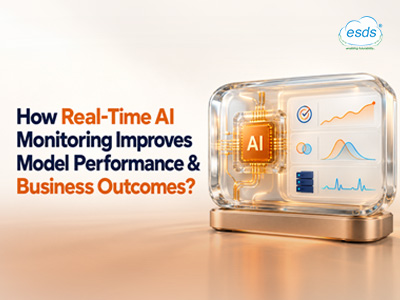
Real-Time AI Monitoring for Better Model Performance
TL;DR Summary : AI models can degrade silently in production due to data drift, model drift, infrastructure issues, latency, and changing user behaviour – even when systems appear healthy. Real-time AI monitoring continuously tracks model performance, data quality, infrastructure, application health, and operational signals to detect issues early. By connecting AI telemetry with business outcomes,... Read More
30
Sep
Top Enterprise Use Cases for GPUaaS in AI & HPC
TL;DR: This article explains what GPU as a Service (GPUaaS) is and why enterprises are adopting it: high GPU capital costs, procurement lead times, uneven utilisation, and access to the latest architectures. It covers six enterprise use cases (LLM training and fine-tuning, generative AI inference, computer vision, fraud detection, scientific computing/HPC, and recommendation engines), compares... Read More
28
Sep
What Is an AI Factory? Architecture, Benefits & Use Cases
TL;DR: An AI factory is a purpose-built environment that combines data pipelines, GPU compute, MLOps and governance to turn raw data into AI outputs reliably and at scale. This guide covers how it works, its architecture, benefits, industry use cases, and deployment options.An AI factory is a purpose-built computing environment that turns raw data into... Read More
22
Sep
AI-Powered SIEM Trends That Will Shape Security Operations in 2026
AI-powered security information and event management (SIEM) solutions enable practitioners to work far more efficiently and effectively than traditional SIEM solutions, which rely on manual processes to configure data ingestion, triage alerts, and create incident response playbooks, to name a few.Generative AI (GenAI) is used by the most sophisticated of these new SIEM solutions to... Read More
09
Sep
Why Enterprises Need AI-Driven Observability with SWARAJ Garuda and SWARAJ Jatayoo?
Enterprise IT environments have grown too complex for manual monitoring to keep pace. Applications now span microservices, containers, multiple databases, and hybrid infrastructure, and a single unmonitored gap can turn into downtime, a compliance gap, or a data breach. This is why AI-driven observability has moved from a nice-to-have to an operational necessity for enterprises... Read More
31
Jul
What Is Database Activity Monitoring (DAM) and How Does It Work?
By 2026, databases will have evolved to become the main storage place for the most valuable assets – the data itself. With an increasing amount of data produced by businesses, ensuring database security becomes even harder. The current enterprise operates in a hybrid, multi-cloud, and distributed environment, which makes standard security approaches not enough for... Read More
28
Jul
How AI-Driven SIEM Reduces Alert Fatigue at Scale?
Every morning, security analysts across the world open their dashboards and face the same impossible task. Thousands of alerts. A handful of genuine threats are buried somewhere inside. And no reliable way to tell the difference quickly. According to IBM’s Cost of a Data Breach Report, the average enterprise SOC receives over 10,000 security alerts... Read More
23
Jul
When Should You Use GPU-as-a-Service Instead of CPU Cloud?
Every infrastructure decision eventually comes down to one question: is this workload better suited to a CPU or a GPU? As AI, machine learning, and data-heavy applications become standard parts of business operations, that question directly affects your training time, inference costs, and ability to ship on schedule. This guide breaks down exactly when GPU-as-a-Service... Read More